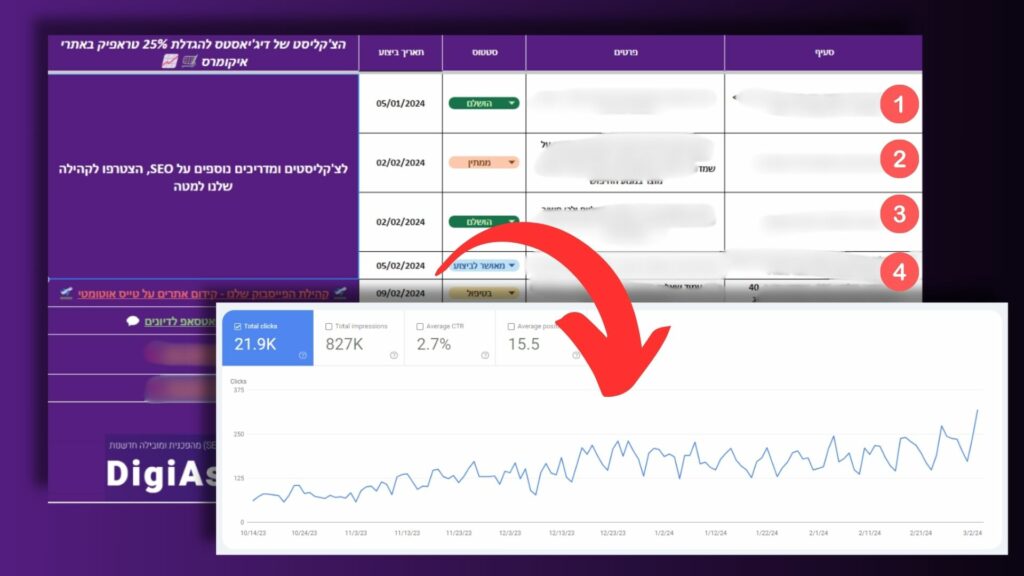

Want to learn how to do SEO for your own site without breaking the bank? Join the Squadron 👆
So How Did We Grow Organic Traffic to an E-commerce Store by 25% With Just Optimization and Content?
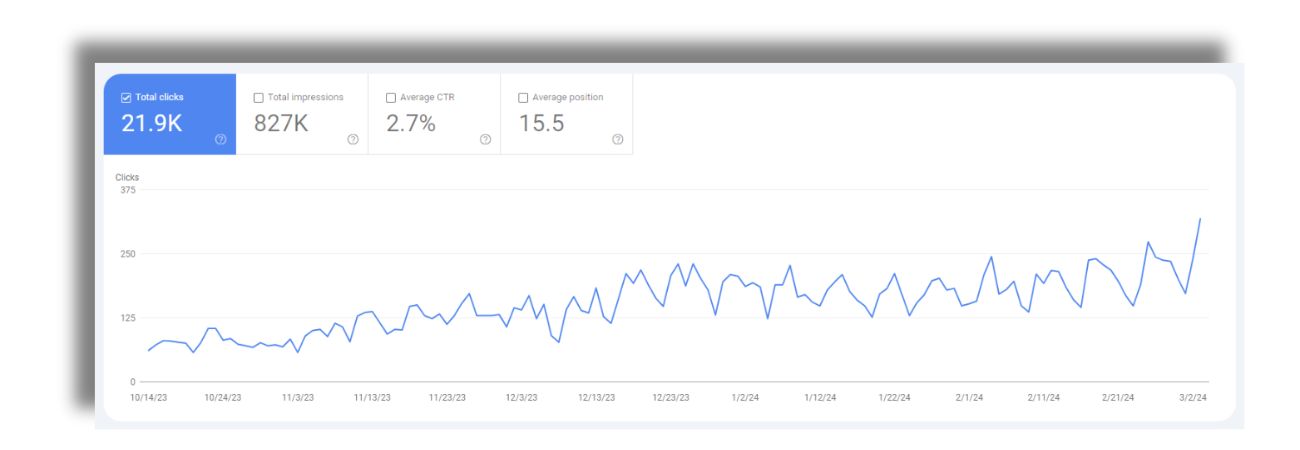
Pictured:
The clicks chart from our client’s Search Console, a jewelry e-commerce site, over the last six months.
In less than six months of work, here are some of the main things we did on the client’s site:
1. Added breadcrumbs to every product page with a Home > Category > Subcategory > Product structure. Sounds obvious, right? You wouldn’t believe how many stores miss this 🙂 A small, smart fix that instantly built internal links to all the main category pages, the money pages.
One of the things we love about e-commerce SEO is that there’s a lot of meat to work with. Lots of catalog pages, product pages and category pages you can build out with content. E-commerce is full of opportunities for improvement, things store owners overlook, like subheadings inside product pages and metadata that can significantly increase click-through rates to products.
2. Brought the content and on-page SEO of all these pages up to standard: added technical spec tables to products, key elements like subheadings for subtopics and bulleted lists, and expanded every page with content based on data we pulled from GSC on the keywords they were ranking for.
3. Based on keyword research and GSC, we added about 40 more Q&As to the FAQs page for E.E.A.T, to rank the page for more queries and strengthen the domain’s authority on the various topics.
4. Like any e-commerce site, this one is very visual. Each product page has about 10 images, and each category page has about 200. We did surgical work writing alt text for all these images using an interesting automation we built that reviews each image, and we started seeing traffic from Google Images.
5. For out-of-stock products that the client decided to simply delete from the site (something we always recommend avoiding, because it creates a 404), we redirected them to the most relevant alternative products. That way, visitors coming from search don’t get frustrated by an out-of-stock item or land on a 404. Instead, they go straight to a product that exists and meets their need, or to the main collection page.
All the actions here, plus more effective steps in our checklist, helped the client grow organic traffic by 25%, which translated into thousands of additional visits over the last six months.
Scroll down for the full checklist👇
Want to learn how to do SEO for your own site without breaking the bank? Join the Squadron 👆
The Complete E-commerce SEO Checklist Without Links:
- ✅ Breadcrumbs on every product page with a Home > Category > Subcategory > Product structure: creates internal links to every page on the site + strengthens the hierarchical structure.
- ✅ Add Product schema to all products: Product schema presents product information to search engines clearly and accurately, and helps Google understand that the page is a product so it can show it as a product result in search.
- ✅ Serve store images in WebP format : e-commerce sites are usually very visual, so it’s important to serve images in a lightweight format for optimal load speed.
- ✅ Pull keywords for each product from GSC and build a separate Q&A section for each product: expand the product page with content + add a section that will
- ✅ Based on keyword research and GSC, we added about 40 more Q&As to the brand’s FAQs page : expanding the FAQ page for E.E.A.T + internal links to the collection pages.
- ✅ Add 5-10 images to every product page, with alt text written using ChatGPT: media and images help drive conversions + increase scrolling on the page.
- ✅ For out-of-stock products that were deleted, redirect to the most relevant alternative products or to the main collection pages: it’s worth keeping product pages even when they’re no longer in stock and just setting their inventory to 0, instead of deleting them entirely, to avoid 404 errors and wasted crawl budget.
- ✅ Write supporting articles for products based on TOFU keywords, with links and CTAs to products: supporting articles help grow the site’s authority on its topic and niche.
- ✅ Expand the product description from 150 words to 800 words on every product page : a detailed description with specs, technical details, sizes and colors, and Q&As matters not only for conversion but also for SEO.
- ✅ Add a promotion like “10% off” to every product’s meta title + meta description, so customers see the offer right in the search results and are encouraged to click through: stand out from competitors in the search results by putting a discount right in the title.
- ✅ We mapped all the internal links missing from the site’s pages and built links to orphaned products and articles: internal link mapping helps you see which pages aren’t getting enough authority so you can strengthen them.
- ✅ Fix open indexing errors in GSC: resolving indexing errors helps optimize crawl budget and directs crawlers to the relevant pages.
-> For your convenience, click here for the full checklist in Google Sheets <-