
How did we double organic traffic and leads for a digital asset we built for a client, using AI content from ChatGPT, Search Console insights and edits by a professional content writer?
As part of our optimization work, we monitor site performance on a regular basis and look for opportunities where we think we can significantly improve results. About two months ago, we decided to try to dramatically improve performance on one site. It had gotten all the care and attention a site needs, but it still wasn’t living up to its potential or the resources invested in it.
So what did we do?
- We pulled a list from Search Console of the 10 key pages that drive the most traffic and generate most of the site’s leads.
- For each of those pages, we pulled the 20 keywords with the most impressions from Search Console.
- We went to ChatGPT and asked it to create a Q&A section based on the queries we pulled from Search Console. We then translated the content into Hebrew, and a professional content writer edited it and published it on the page with FAQ schema.
- We asked ChatGPT to produce a comparison table covering the queries we pulled from Search Console. A professional content writer then translated the content into Hebrew and edited it.
- We added 2 relevant YouTube videos to each page.
- We added 7 more images to each page, with alt text.
- We built several links to each page from our own link network and from a few other high-quality providers, to keep the link profile diverse and relevant.
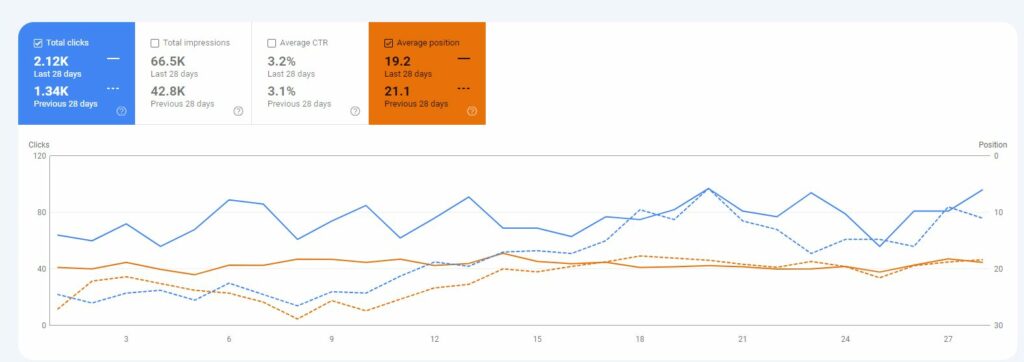
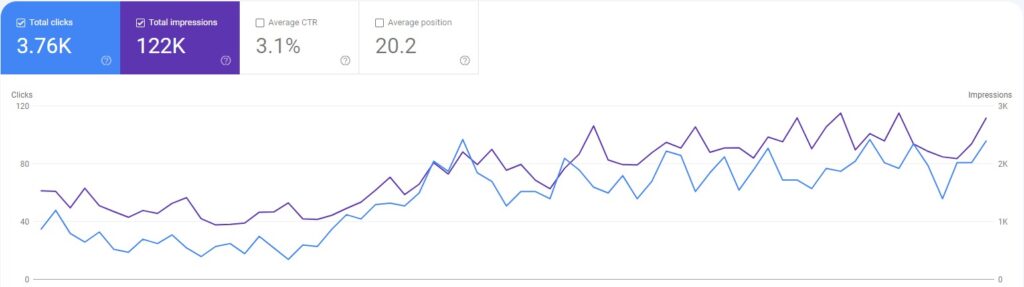
The image shows organic traffic for the last 28 days (2.12K) compared with the previous 28 days (1.34K) on a site we built for a client in medical aesthetics, a highly competitive niche.
A few things we want to share:
- Time on page rose by 34% on average. The content is longer, so visitors stay on it longer.
- Publishing new content regularly matters, but it’s just as important to update, expand and improve existing pages that Google already knows and gives credit to.
- AI is not set-and-forget. In this case it saved us 75% of the time and resources we put into creating the content, but you still have to edit it and make sure the output actually meets your needs.
The more indexed content a site has, the easier it is to pull insights: which keywords/pages Google favors on the domain, which pages get more or less traffic, which types of content work better or worse, and so on. Then you can make business decisions based on that, decisions with real impact. - Persistence, out-of-the-box thinking and smart use of technology can work wonders 🙂
Want to hear more? Talk to me or to Omri Kfir