

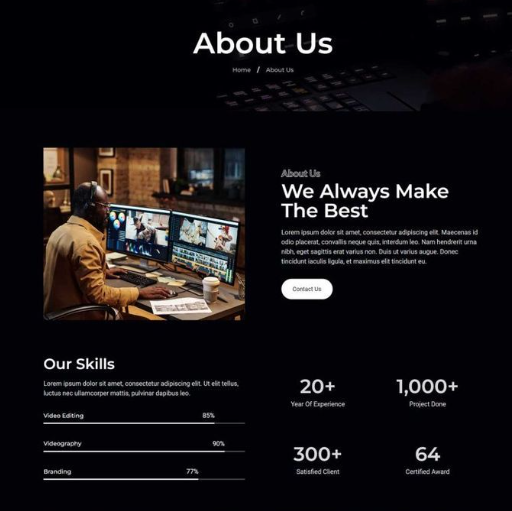
Your About page is no longer just design and PR copy.
It’s your business card for Google and AI engines, and they don’t forgive vague answers.
If you want language models like ChatGPT, Claude or Google Gemini to present you as the answer, your About page has to answer the basic questions in a sharp, structured, machine-readable way.
Here’s the complete checklist that turns your About page into a strategic SEO asset:
1. Title Tag: Your First Impression in Search Engines
What it should include:
- Visibility in search engines and AI Overviews
- Primary keyword or brand identity
- A clear format: “Who is [Name]?” or “What does [Brand] do?”
Why it matters:
When someone asks an AI engine “Who is DigiAssets?”, the title tag is the first place the model looks for an answer.
Real example:
Instead of: “About Page – DigiAssets”
Write: “Who Is DigiAssets? | Leading SEO Company in Israel”
2. Concise Intro: The Direct Answer at the Top of the Page
What it should include:
- 40-60 words only
- A standalone answer to “Who are you and what do you do?”
- Plain language, no jargon
- Placed right below the main heading
Why it matters:
AI models look for a short “answer box” they can quote directly. If you don’t have one, they won’t show you.
Real example:
“DigiAssets is an Israeli SEO company with 8 years of experience. We specialize in organic SEO, strategic content and digital marketing for small and mid-sized businesses. Our expertise: measurable results and full transparency with every client.”

3. Expertise & Credentials: Proving Your Professionalism
What it should include:
- Years of experience as an exact number
- Notable roles or key clients
- Recognition, awards or professional certifications
- Clear areas of expertise
Why it matters:
In YMYL niches (money, health, law), trust is critical. AI checks who you are before it recommends you.
Real example:
- 8 years of experience in organic SEO and content
- Leading clients: SaaS companies, Israeli startups
- Google Analytics and Semrush certifications
- Featured in Globes and TheMarker
4. Unique Selling Proposition (USP): Why You, Exactly?
What it should include:
- 3-4 things that set you apart
- Bullet points or a bolded paragraph
- A focus on results or methodology
Why it matters:
This is where you differentiate yourself from competitors. AI needs to understand why you’re the right choice.
Real example:
✔️ Full transparency: weekly reports with clear KPIs
✔️ Local market expertise: we know the Israeli audience
✔️ A distinctive content strategy: not just keywords, but a sales story
✔️ Personal support: direct access to your project manager
5. Natural-Language Subheadings (H2/H3): Headings That Mirror Real Questions
What it should include:
- Headings phrased as the visitor’s questions or needs
- A clear hierarchy (H2 → H3)
- Helps AI models split the page into sections
Why it matters:
AI engines read headings to understand structure. Good headings = better visibility.
Real example:
Instead of: “Our Services”
Write: “What SEO services do we offer?”
Instead of: “Experience”
Write: “How many years have we been doing organic SEO?”
6. FAQ Block: The Questions That Settle Everything
What it should include:
- 3-5 common customer questions
- Short answers: 60 words max per answer
- Format: question in an H3, answer in a paragraph
- FAQPage schema for maximum visibility
Why it matters:
Google and AI engines love FAQs because they match exactly what people search for. If you have good answers, you’ll show up.
Real example:
How long does it take to see results from organic SEO?
On average 3-6 months, depending on how competitive the niche is and the site’s current state. We report monthly improvements in leading indicators like rankings and impressions.
Do you work with small businesses?
Absolutely. A large share of our clients are small and mid-sized businesses that want to grow in a competitive market.
7. Author/Team Bio: The Faces Behind the Brand
What it should include:
- Name, photo and 2-3 sentences for each key team member
- Roles, specialties or areas of interest
- For a company: the leadership team with trust signals
Why it matters:
AI needs to understand you as a real entity. Team = trust.
Real example:
Omri Kfir, CEO and SEO Strategist
8 years in organic SEO, specializing in data-driven content strategies. Has worked with leading SaaS companies in Israel.
8. Contact & Social Links: How People Reach You
What it should include:
- Email, LinkedIn and other contact options
- Descriptive anchor text (for example: “Book a consultation call”)
- sameAs schema linking to external profiles
- Support for follow-up questions like “How do I contact [X]?”
Why it matters:
AI wants to know how to tell a potential client to contact you. If it isn’t clear, it will give a vague answer.
Practical example:
📧 Email us: admin@digiassets.co.il
📞 Call: 03-1234567
📅 [Book a free consultation call](calendar link)
9. Structured Signals (Schema Markup): The Language Machines Understand
What it should include:
- JSON-LD (Google’s preferred format)
- Schemas: Person, Organization, FAQPage, sameAs
- Stronger machine readability for your About page
- Tools like RankMath or Schema Builder make implementation easier
Why it matters:
It’s like handing an AI model a map. Without it, the model guesses. With it, the model knows exactly who you are.
Real example:
{
“@context”: “https://schema.org”,
“@type”: “Organization”,
“name”: “Digiassets”,
“url”: “https://digiassets.co.il/en/”,
“logo”: “https://digiassets.co.il/logo.png”,
“sameAs”: [
“https://www.linkedin.com/company/digiassets”,
“https://www.facebook.com/digiassets”
]

Summary: Your About Page Is No Longer Just “About Us”
Most people spend hours on blog posts and 10 minutes on their About page.
It should be the other way around.
Your About page is your business card for AI engines.
If you want to show up, get cited and be seen as an authority, this is where you start.
Want to upgrade your About page?
At DigiAssets, we build About pages that work hard for you.
Contact us


